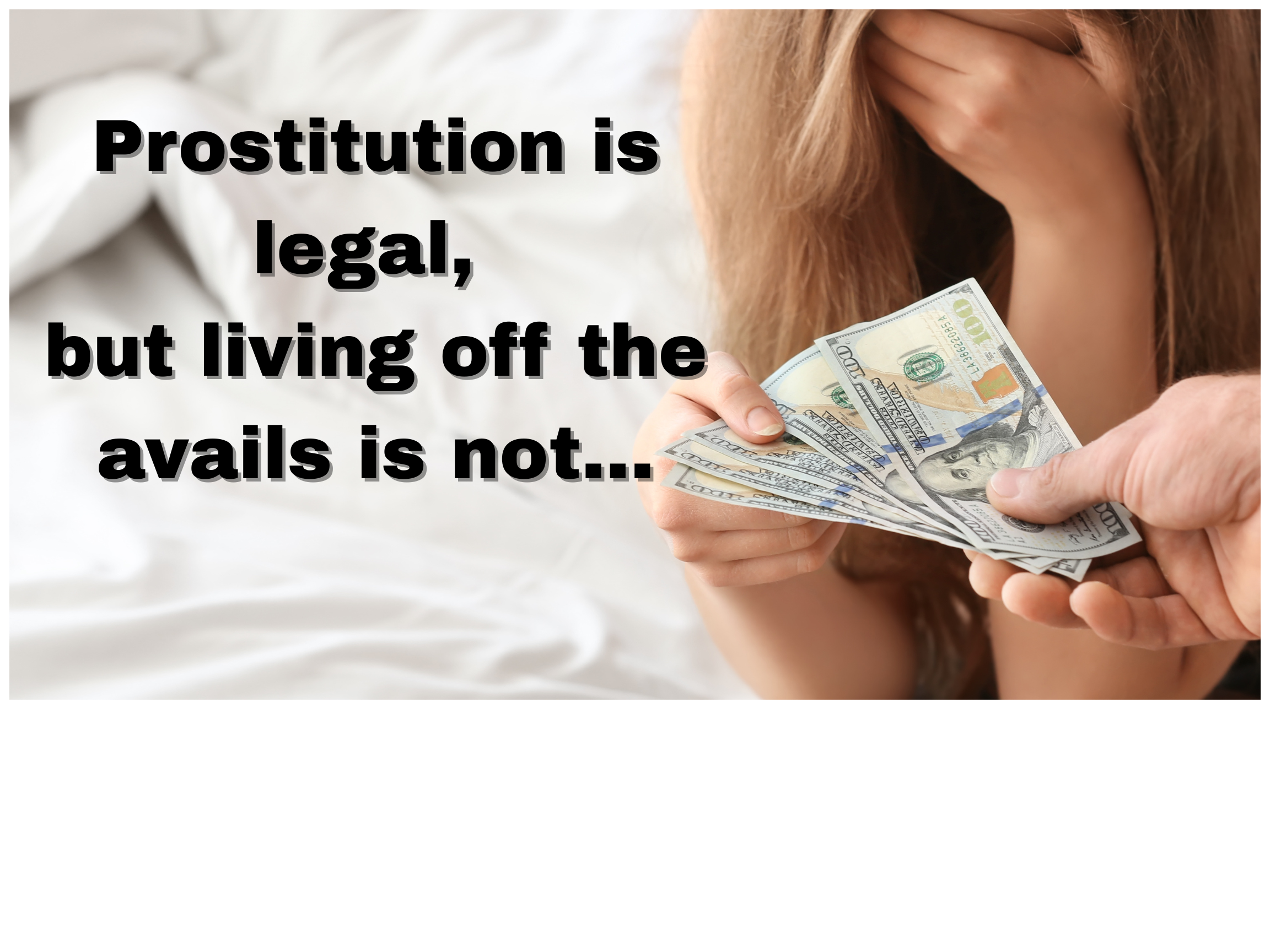
We find ourselves in an anomalous, some would say bizarre, situation where almost everything related to prostitution has been regulated by the criminal law except the transaction itself. The appellants’ argument then, more precisely stated, is that in criminalizing so many activities surrounding the act itself, Parliament has made prostitution de facto illegal if not de jure illegal.
-Chief Justice of the Supreme Court of Ontario
When the Supreme Court of Canada struck down sections of the law governing prostitution, the federal government passed a new bill, C-36, which it called the Protection of Communities and Exploited Persons Act. The intent of the act was to criminalize some aspects of prostitution while decriminalizing prostitution itself. The legislation was patterned after what is known as The Nordic Model and criminalizes clients, third parties and many of the ways sex workers operate. The intent was to discourage the purchase of sexual services by criminalizing the “johns” and the brothel owners, but not the prostitutes. That this change was unfolding at the same time the internet was expanding simply compounded the problem. The result was to drive prostitution further underground, off the streets and onto the web, the dark web and into multiple pseudo-sexual enterprises that operate within the grey areas of the law, including escort services, strip clubs and body rub parlors.
The new legislation also failed to address the full spectrum of those who work in the sex industry, focusing solely on females while ignoring males and transgender sex workers, leaving them essentially unprotected.
In my novel, Hollister: The Corridor, I make the point that these conditions leave a lot of room for interpretation. In practice, they virtually ensure that prostitution takes place in secret, behind closed doors, with no discernible impact on the prevalence of prostitution at all.
The current situation makes it inevitable that organized crime finds the provision of prostitution services lucrative. Because it is forced to exist in hiding, it facilitates human trafficking, physical abuse and sexual exploitation, including of juveniles.
There are parallels to the debate around cannabis that played out over the last decade and resulted in widespread decriminalization of its use, cultivation and distribution. While it did not stop the use of cannabis, it regulates, taxes and monitors the distribution of it, largely disincentivizing organized crime from operating in that space.
There are several models in Europe that, while not perfect, better address the problems associated with prostitution. Austria, Belgium, Germany, the Netherlands, Switzerland and Denmark allow open prostitution with strict licensing requirements for brothels and workers. Other countries-Greece, Poland and Spain have legalized prostitution while banning brothels and Portugal and Czechia have removed all restrictions entirely.
In The Netherlands, where brothels are legal, they are strictly regulated. They are permitted to operate in specific zones, away from schools and churches. Prostitutes are licensed by the state and regularly monitored for STD’s. Most importantly, they operate in protected, secure environments that are inspected regularly. Workers are covered by existing employment legislation, pay income taxes and benefit from state social services.
In 1967, Pierre Elliott Trudeau, then Justice Minister of Canada, famously said there’s no place for the state in the bedrooms of the nation. While he was referring to homosexuality, abortion and divorce at the time, his message is still appropriate. Centuries of criminalization of prostitutes and their clients failed to stop the practice anywhere in the world.
The roots of anti-prostitution laws are found in both historic conceptions of morality in organized religion and more recently in benevolent attempts to prevent exploitation of vulnerable people in society. Unfortunately, in the latter case, those attempts have, more often than not, increased rather than diminished the incidences of exploitation.
Some of the worst examples are in the strict theocratic countries like Iran, Mauritania and Afghanistan where prostitution and child exploitation flourish despite officially significant penalties up to and including death for both women and men. More often, the women, because of their prevailing status as second-class.
If Canada wants to get serious about stopping sexploitation, whether of minors or adults, it will need to undertake a serious reexamination of existing legislation to bring prostitution out of the shadows.